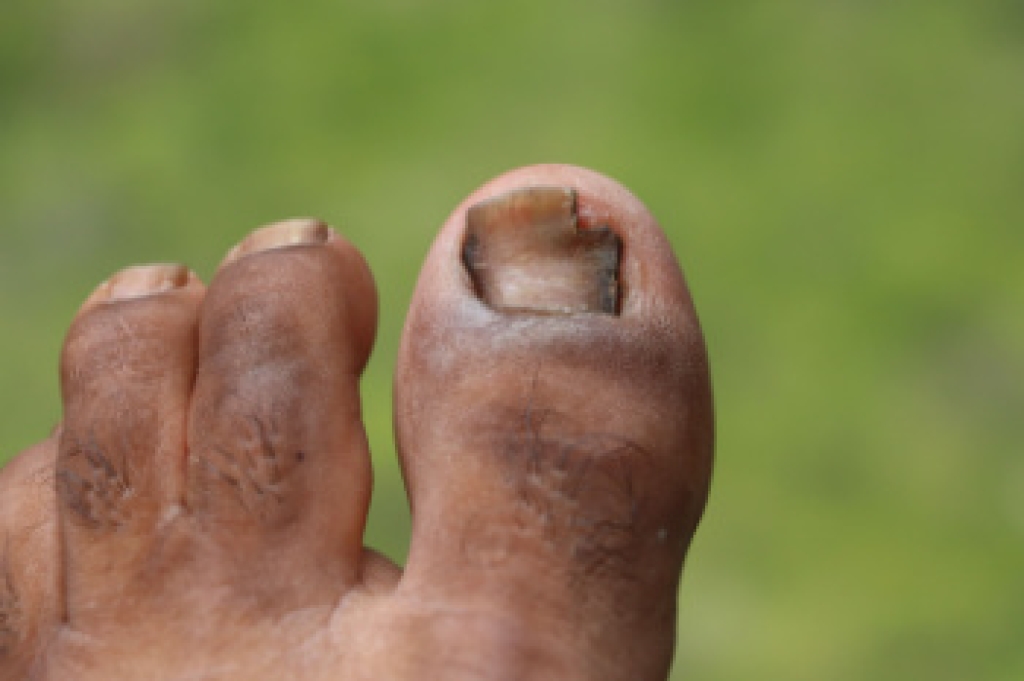
Fungal toenails develop when fungi enter the nail through tiny cracks or damaged areas. The infection usually begins after a fungal skin infection spreads to the nail, such as athlete’s foot. Thick, discolored, or brittle nails are common signs. The nail can also become misshapen, separate from the skin beneath it, or break apart. People with diabetes, poor circulation, or a weakened immune system face a greater risk. A chiropodist carefully examines the affected nail to confirm the cause because other nail problems can look similar. Treatment includes reducing thickened nails to improve comfort and appearance. It also includes professional care to manage the infection and regular monitoring of nail health. Early treatment helps limit further nail damage and reduces the chance of the infection spreading to other nails. If you have symptoms of toenail fungus, it is suggested that you schedule an appointment with a chiropodist for diagnosis and appropriate treatment.
Toenail fungus can be uncomfortable and unsightly. If you have diabetes or a compromised immune system, it may also be dangerous. To learn more about treatment options, please consult with one of our chiropodists from West Toronto Foot & Ankle Clinic Inc. . Our chiropodist will assess your condition and provide you with quality foot and ankle treatment.
What Does Toenail Fungus Look Like?
A fungal infection of the toenail may cause the affected nail to become thickened, brittle, crumbly, and yellowish or brown in color. Sometimes the toenail may separate from the nail bed, become deformed, emit a foul odor, or cause pain or discomfort.
What Causes Toenail Fungus?
Toenail fungus is caused by a fungus that infects the nail bed. The fungus lives and thrives in warm and moist environments and is also contagious. Athlete’s foot, which is a fungal infection of the skin, may spread to the nails and cause toenail fungus.
What Treatments Are Available?
Potential treatments for toenail fungus may include oral antifungal medications, topical antifungal medications, such as medicated nail polishes that are applied directly to the affected nail, and laser therapy. Sometimes, a combination of treatments is prescribed.
If you have any questions please feel free to contact our office located in Toronto, ON .
